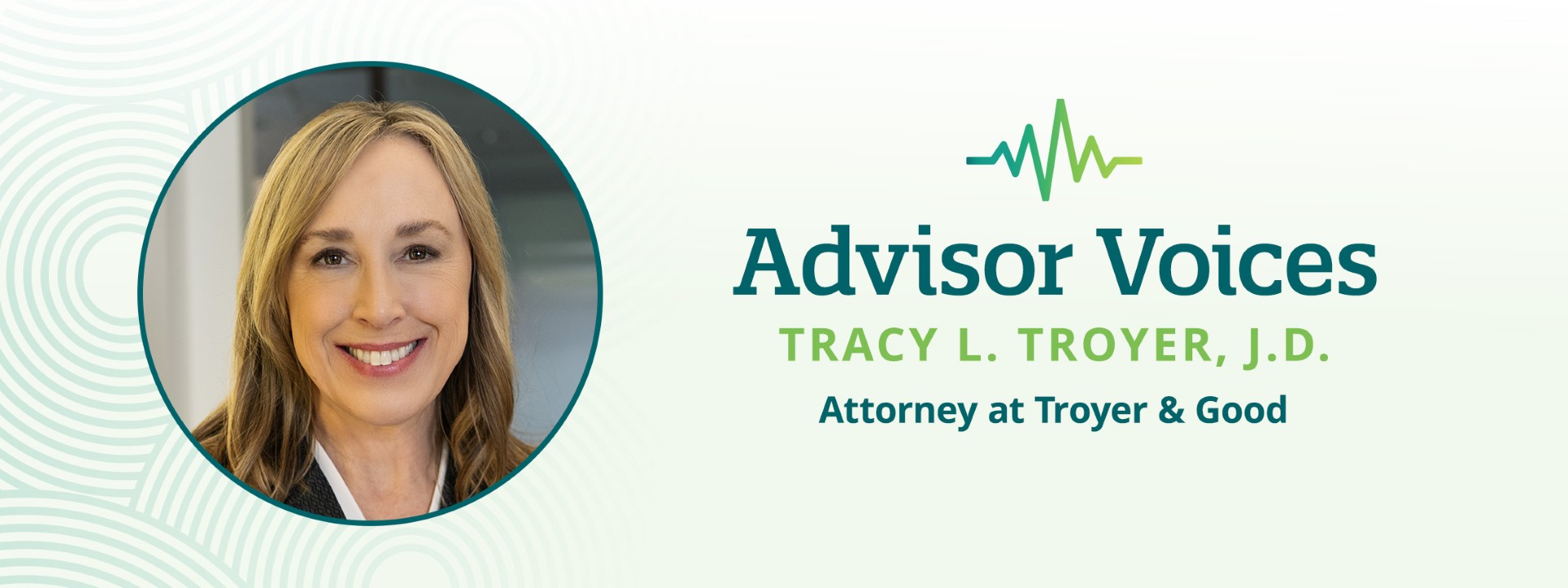
Advisor Voices: Tracy Troyer, J.D.
Troyer & Good, PC — Estate Planning, Probate & Elder Law
Why do you think it’s important to bring up the topic of charitable giving to your clients?
At its core, estate planning is about values — what matters most to a person and what kind of mark they want to leave on the world. For some clients, this means providing for children and grandchildren. For others, it also means supporting the organizations and causes that have impacted their lives. My job is to make sure every client knows what options exist.
I typically raise the topic of charitable giving with my clients because, in my experience, lack of generosity is rarely the problem — awareness of how to bring their generosity to life often is. Many people don’t realize how seamlessly charitable intent can be woven into an estate plan or how much more their gifts and bequests can accomplish with the right structure such as a fund with CFGFW. Once they understand the available tools, the conversation becomes less about whether to give and more about how to give most effectively.
How do you learn about your client’s charitable interests?
It starts with listening. In our initial meetings, I ask clients questions that reveal a great deal about their lives — their families, their work, and the things they care about. Charitable intent tends to surface naturally in those conversations. A client might mention a church they have attended for years, a health issue that touched their family, or a local organization they feel a connection to. Those topics help steer the conversation.
I also pay attention to clients’ perspectives on legacy — not just financial legacy, but how they would like to be remembered. That often opens the door to a deeper conversation about philanthropy. Sometimes clients haven’t thought of themselves as “charitable givers” in a formal sense, but when we talk about what has been significant to them, it becomes clear that giving is important to many people. My role is simply to help them make it happen.
What questions or ideas about charitable giving do you find resonate the most with your clients?
The question that seems to unlock the most meaningful conversations is: “In addition to your family, is there an organization or cause you’d want to name in your Will or Trust?” It’s a simple question, but it gives clients permission to consider making a broader impact.
On the planning side, clients are often surprised to learn how tax-efficient charitable giving can be. Assets held inside a traditional IRA or 401(k) are among the most heavily taxed assets an individual heir can inherit — but clients can give to a charity completely income-tax-free. When I explain that a $100,000 IRA left to an adult child might yield only $70,000 or $75,000 after taxes, while a charity would be able to keep the full $100,000, many clients immediately see the wisdom in directing those assets to a charity and leaving other assets — real estate, investments with a step-up in basis — to their families instead. The alignment of generosity and proper planning resonates deeply.
Tell us about your experience with the Community Foundation and why you’d refer your clients to us.
The Community Foundation of Greater Fort Wayne has been a trusted partner in my practice for many years. Through my clients, I’ve had the opportunity to witness the Community Foundation’s work up close and to develop relationships with the incredible people who work there. On a personal level, I set up a Donor Advised Fund a few years ago, and the process was incredibly easy thanks to the advisors and staff.
What I appreciate most about the Community Foundation is the combination of professionalism and genuine community commitment. When I refer a client to the Community Foundation, I know they will be treated with care, have their options explained thoroughly, and be assisted in structuring a lifetime gift or a bequest that truly reflects their wishes. The advisors understand that a Donor Advised Fund or other planned gift isn’t just a financial transaction — it’s a deeply personal, rewarding expression of what someone believes in.
For clients who want their estate plan to help their church or other charitable organizations, the Community Foundation is their best ally. They know our community well, they are invested in its future, and they have the infrastructure to steward charitable gifts for generations. I refer clients there with confidence.